Please Support Pennsylvania Elk Tourism And Photography

Wednesday, April 6, 2011

Pennsylvania Deer Wars: Should The Cougar Be Re-introduced?

Fawn Nursing, July 2005
 I have mentioned the Pennsylvania Deer Wars in several posts, but have not actually given a definition of them to date, as I assume that most readers are aware as to the issues involved, but for those that are not I will explain in a grossly oversimplified manner. (I hope to expound on this in much greater detail in the future)

One camp contends that there are too many deer in Pennsylvania for the natural habitat to support. This results in over-browsing by deer, which destroys many species of trees, wildflowers and other plants that are essential for food and cover for both deer and many other species of wildlife. In short, too many deer destroys the habitat and causes populations of competing species to decline.

The other camp insists that the deer herd has been reduced too much by a herd reduction program which began with the appointment of Dr. Gary Alt as head of Pennsylvania's deer program in 1999. Alt's program featured concurrent buck and doe seasons, an October blackpowder and Jr., Sr. citizens antlerless deer season, along with antler restrictions. Some contend that the program has impacted deer numbers so severely that Pennsylvania deer hunting has been destroyed.

In light of this, it was interesting to read a letter to the editor In the April 2, 2011 edition of "Endeavor News" (the full article is available to be read by the general public in two weeks) .  Entitled "Nature Out Of Balance", it is by Christopher Spatz, President of the Cougar Rewilding Foundation. This was in reference to a recent announcement by the U.S. Fish and Wildlife Service that the Eastern Cougar is officially extinct. (To see the NFWS release in its' entirety, click Here.)

Spatz makes the case that,"the extinction of the cougar has tolled a death-knell for eastern ecosystems". He goes on to say, "The cougar’s extermination in the East imperils the habitat of animals such as the endangered Karner Blue butterfly and the declining New England cottontail rabbit because of overbrowsing by superabundant whitetailed deer. Many plant species, including trilliums, lady’s slippers and wild American ginseng, are at risk from uncontrolled deer herbivory that threatens forest regeneration, rare plants and habitat for wildlife.

The potential collapse of our restored deciduous forests is the biggest underreported ecological crisis developing in the eastern third of the country. Step into your nearest woodlot, state or national forest. Notice the deer browse-line five-feet high, the missing seedlings and saplings, the carpets of ferns and invasive weeds that suppress tree-growth. Our forests are standing graveyards."

From there he goes on to make a case for the re-introduction of the cougar in the east. I can't help but wonder how the deer oriented members of the outdoor community are going to react to this one, if this letter is widely disseminated, and he has likely sent it to a lot of newspapers.

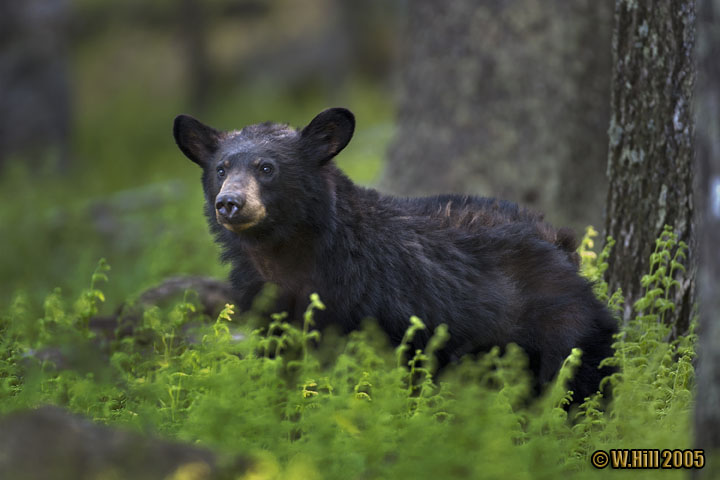
From reading this letter, it sounds as though the woods is over ran with deer and no one is doing anything about it, yet according to the Pennsylvania Game Commissions figures, 316,240 deer were harvested in the 2010-11 seasons (PGC News Release #031-11).  There is also no mention of the toll that black bears and coyotes have on fawn populations,or the impact of animals killed illegaly yet the re-introduction of the cougar is needed to save the forest!

Coyotes Impact Whitetail Deer Populations
Black Bears Also Contribute To Fawn Mortality
Illegal Killing Of Deer Further Decimates Populations
 It is likely that the letter is of necessity a greatly condensed version of the organization's position, but after reading it I can't help but wonder if they have any comprehension of the politics of wildlife management in Pennsylvania, or the attitude of many if not most rural residents toward a cougar reintroduction.

Originally posted at Pennsylvania Wildlife Photographer by Willard Hill

Friday, April 1, 2011

Pennsylvania Bull Elk Now Shedding Antlers

 Bull Elk With Antlers: March 30, 2011
 Rapidly advancing technology is both a blessing and a curse.  One is  glad to see a greatly improved final product whether it be either still photographs or video, but the never ending changes make it very hard to maintain an up to date inventory of video footage or still images of wildlife and its' behavior.  In my opinion video is impacted the most as only a few years ago everything was shot in standard definition (SD) and at a 4:3 aspect ration (the shape of the old tube type TVs), but now everything is high definition (HD), which of course is shot to fit the wide-screen format of the HD TVs.  While the modern DSLRs do make better images than the earlier models, it is not nearly as significant of a difference as with the video, because SD video was very low resolution to begin with and manipulating it to fit a wide-screen production, even one which is delivered on a standard DVD, results in a certain amount of image degradation.  Some animal behavior is not all that hard to document, while other things can be a once in a lifetime occurrence.  It is not especially hard to document the shedding of the bull's antlers and the growth of the new ones, but it does require either spending a lot of time in the elk range or just happening to be there at the right time.  I like to concentrate on photographing turkeys from mid-March until early May, so I am usually not in the elk range during this period.


The bottom line was that although I have been shooting HD since 2007, I had no HD footage of this particular event, so I traveled to elk country this past week with two major goals in mind.  First I wanted to film bulls that had already shed their antlers and started growing new ones, and secondly I wanted to film either a bull with two pedicels showing no growth, or one with one antler shed and one still present.  Still photography was to be secondary and attempted only after the video footage was taken. On Wednesday morning I finally succeeded in filming both, but only bulls with both antlers still intact lingered long enough for still photos, so the ones depicting the shedding are still captures from the XL-H1 video camera.


One Antler Shed: Video still capture Canon XL-H1
Right Antler Has Been Shed At Least A Day Or More: Note Scab: Video still capture Canon XL-H1
Bull With New Antler Growth: Video still capture Canon XL-H1
In most cases, the mature bulls shed first and that can occur in late February, but it is much more likely to happen in March.  I was actually surprised to find that most of the bulls that I saw still had antlers, but a seasoned elk photographer pointed out that this was because most of them were young bulls.  Even the first bull shown, which had not yet shed,  is not a top-tier bull and is likely not all that old, but I did expect that most bulls of this size would have lost their antlers by now.

Originally posted at Pennsylvania Wildlife Photographer by Willard Hill